
Planning Your Next System Improvement
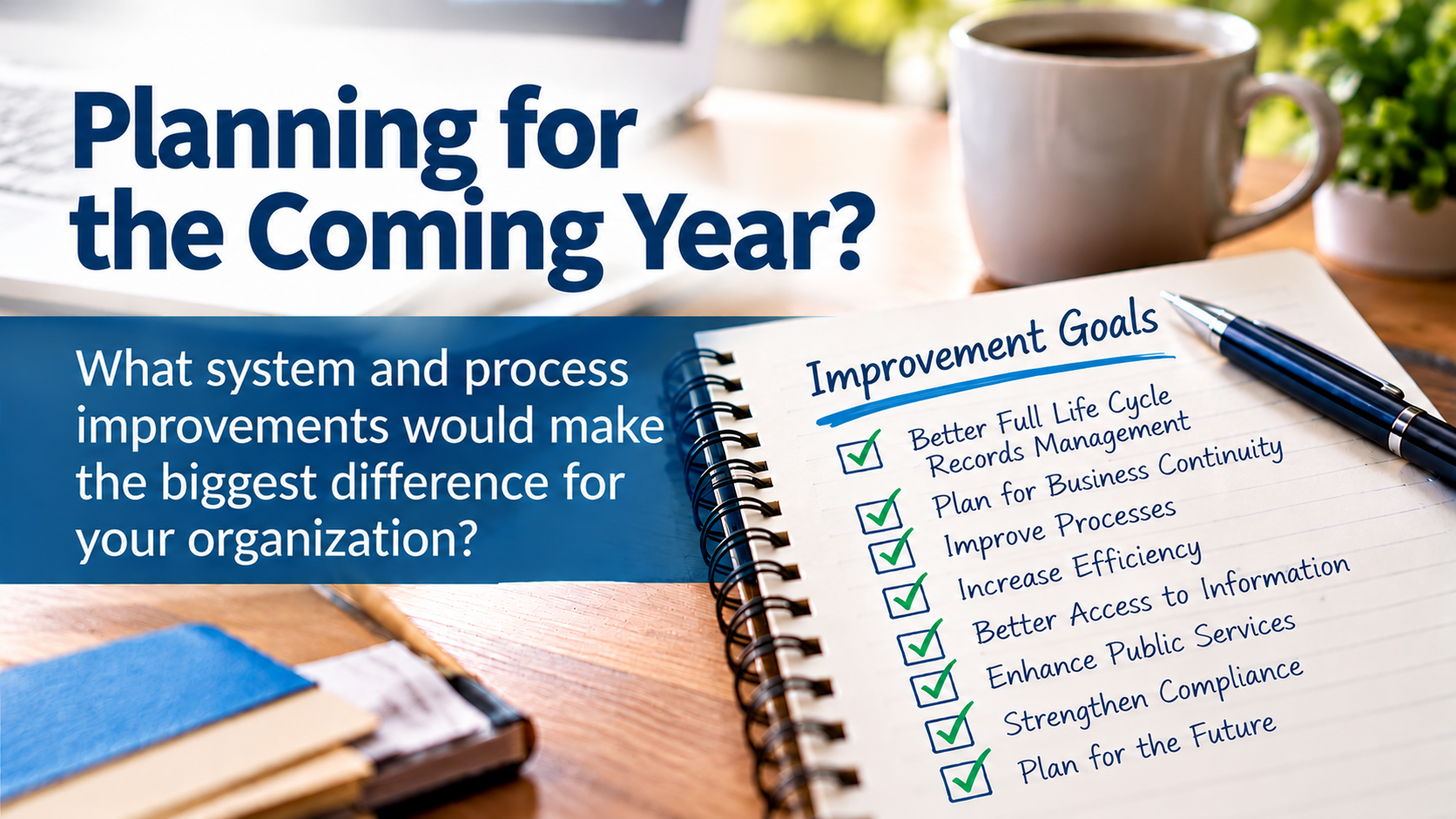
What systems, processes, and information-management improvements would make the biggest difference for your organization?
Successful system improvement planning begins with understanding what needs to change, not necessarily deciding what technology to purchase. Whether you’re improving records management, strengthening business continuity, simplifying everyday processes, or preparing future budgets, a thoughtful approach can help identify opportunities and establish priorities.
Consider these questions as you plan for the coming year.
Identify Opportunities
What’s taking too much time, costing too much, or creating unnecessary work? Are records difficult to locate, information requests taking longer than necessary, or manual processes slowing down everyday operations?
Evaluate Existing Systems & Processes
What can be improved before considering replacement? Could existing technology be used more effectively? Are there opportunities to improve records management, strengthen business continuity, or connect systems that currently operate independently?
System Improvement Planning Priorities
Which changes would deliver the greatest operational benefit? Consider staff time, information accessibility, compliance requirements, service improvements, and the potential return on investment.
Continuous Improvement in Action: County Meeting Records
How long does it take to prepare a Board of Commissioners agenda? How long after the meeting does it take to make recordings and reviewed draft minutes available?
County meeting records provide a practical example of how the Plan–Do–Check–Act (PDCA) cycle can be used to identify opportunities, implement improvements, and measure results.
Applying Plan–Do–Check–Act
| PDCA Stage | County Meeting Records Application |
|---|---|
| Plan | Measure current agenda preparation time and the elapsed time between a meeting and the availability of recordings and draft minutes. Identify delays and handoffs. |
| Do | Implement meeting folders, metadata, approval workflows, recording uploads, queued transcription, and AI-assisted summaries. Make appropriate public-facing documents available through the Public Portal. |
| Check | Compare actual cycle times against the baseline. Measure rework, accuracy, and publication delays. |
| Act | Refine the process, address bottlenecks, and establish improved procedures for subsequent meetings. |
Establish a Measurable Improvement Goal
For example, a county might establish a goal of making meeting audio and video recordings, along with reviewed draft minutes, available by the next business day following a Board meeting.
Final approved minutes may require formal adoption at a subsequent meeting. Publication and retention procedures must follow applicable statutory requirements, county policies, and established approval processes.
Explore the County Meeting Records Use Case
Our Agenda & Meeting Records Management use case demonstrates how Laserfiche can support this process, including repository organization, meeting metadata, recordings, transcription, AI-assisted summaries, and records management.
Explore the County Meeting Records Use Case — Mt. Jefferson, Peak 2 of the Nine Peaks Collection
Consider the People Who Use the Systems
Are employees spending unnecessary time working around existing processes? Are citizens, customers, or other stakeholders having difficulty accessing information or services?
Plan for Resources & Budgets
What improvements should be planned for the coming year? What staff resources, technology investments, or future budget allocations may be needed to accomplish your goals?
Consider whether improvements can be completed in phases, whether existing systems can be extended, and what preliminary cost estimates may be needed to support management discussions and budget preparation.
Planning Your Next Improvement? Let’s Talk.
Whether you’re identifying opportunities, evaluating existing systems, or preparing future budgets, Nine Peaks Solutions can help you explore practical options, establish priorities, and determine your next steps.
Early planning can also help organizations avoid unexpected expenses, establish realistic project schedules, and make better-informed technology decisions.
Request a System Improvement Planning Consultation →